Collin Gosselin alleges years of basement confinement as Kate denies abuse claims
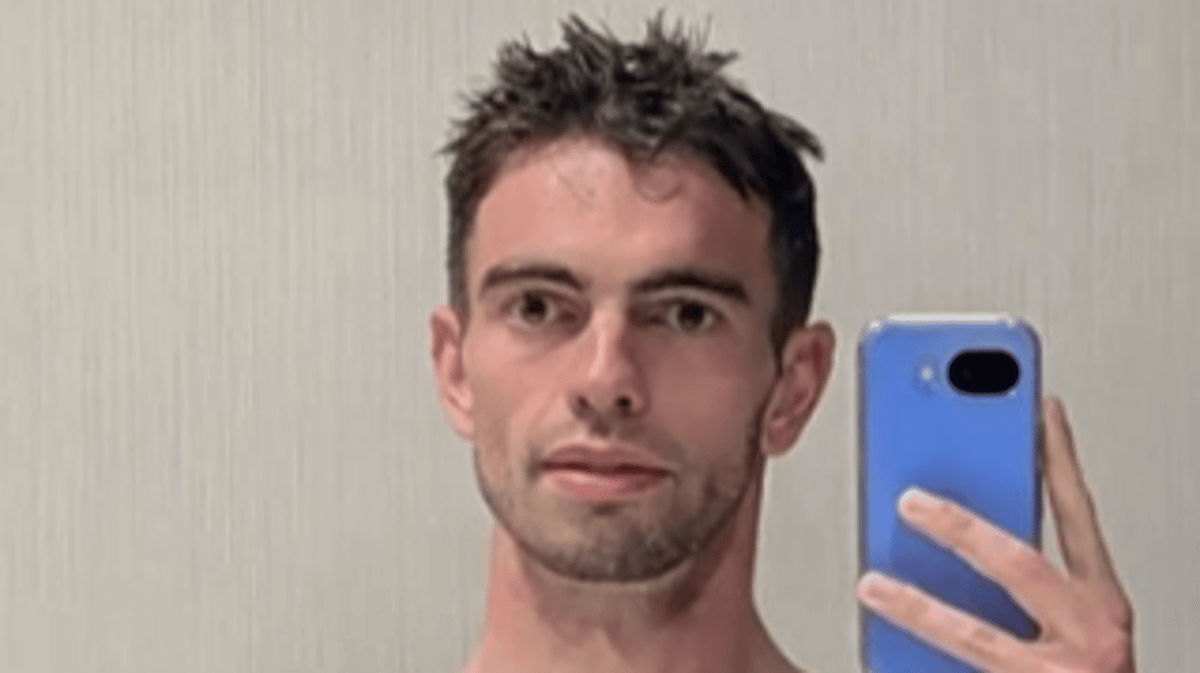
Collin Gosselin bares all in his new memoir, “In the Shadow of Eight: Surviving the Reality of My Childhood.”The book, published Tuesday, gives readers a blistering portrayal of the “Jon & Kate Plus 8” alum’s allegedly “dark” and “violent” childhood — particularly taking aim at mom Kate Gosselin.The 22-year-old announced in January that he had a tell-all on the way, with the cover reveal featuring a throwback photo of Kate, 51, covering young Collin’s mouth with her hand.“This is not a story for entertainment, it is a story to instill responsibility in everyone to advocate and speak up against abuse, injustice and the exploitation of children,” Collin wrote via Instagram in June.Colin Gosselin (pictured above on Sept. 30) released his memoir, “In the Shadow of Eight,” on Tuesday. Getty ImagesThe tell-all details the alleged abuse he suffered from mom Kate Gosselin (pictured above in June 2019). Getty ImagesPage Six heard three months later that Kate was “nervous” about her estranged son’s book hitting shelves and considered him a “traitor.”She has previously denied his “heartbreaking” claims of abuse, dismissing them via Instagram in 2023 as “complete fabrications” and claiming her son’s “distorted perception of reality is one of the many issues that he always struggled with.”Most recently, Kate wrote via TikTok in July that she doesn’t “feel [the] need to defend” herself publicly. Reps for TLC and Kate have yet to respond to Page Six’s requests for comment on Collin’s allegations.Keep reading for a selection of the darkest allegations from Collin’s memoir.Exhausting experience filming ‘Jon & Kate Plus 8’Collin described his experience on “Jon & Kate Plus 8” and “Kate Plus 8” in the book. (Pictured above: Kate holding Hannah Gosselin while Jon Gosselin feeds Collin and Madelyn Gosselin looks on in September 2004.) MediaNews Group via Getty ImagesCollin (pictured above on the right) wrote that he felt “trapped” by the “daily pressure to perform” for the cameras. Disney General Entertainment Content via Getty ImagesCollin and his sextuplet siblings — Joel, Aaden, Hannah, Leah and Alexis — as well as twins Madelyn and Cara appeared on “Jon & Kate Plus 8” between 2007 and 2010, then on “Kate Plus 8” for six more seasons after Kate and Jon Gosselin’s divorce. In his book, Collin denied any “oversight” or “structure” in terms of how often he was in front of cameras as a child.He claimed that in the making of the TLC show, which allegedly earned the network a whopping $186 million each quarter, the little ones filmed “as much as the studio wanted” and “as much as [Kate] wanted.”Collin recalled feeling “trapped” by the “daily pressure to perform” for the cameras — so he began “resisting filming.”He explained that this was not a “dramatic” resistance,” instead characterized by his refusal to “smile on cue” and “play along.”Divorce dramaHe detailed an allegedly explosive fight between Jon and Kate (pictured above in 2000) before their 2009 divorce. Barry Talesnick/Globe Photos/ZUMA Press Wire / ShutterstockHe described the couple’s alleged “resentment … spill[ing] out” when cameras were off. (Pictured above: Jon and Kate in April 2008.) Getty ImagesCollin revealed to readers that his “most vivid memory” as a child was a “scary” fight overheard between Kate and Jon prior to their 2009 split.He recalled the former couple allegedly “raging” at each other in a “loud and explosive” argument that left himself and his siblings “trembling.”Collin, who claimed Kate allegedly swung a pair of headphones “through the air like a weapon” before discarding them “in the middle of the foyer,” said his parents’ “resentment … spilled out” in the rare moments cameras were off.He did not remember what was said besides Kate allegedly telling her then-husband to “shut up” and Jon arguing that his then-wife “never listen[ed]” to him.The duo were married for 10 years before calling it quits.Verbal abuse accusationsCollin accused Kate (pictured above in March 2010) of verbal abuse. WireImageAccording to Collin, Kate’s constant criticism dubbed him “untrustworthy” and “bad.” (Pictured above: Kate in 2019.) Getty Images for DiscoveryCollin claimed Kate yelled at all of her children “for everyday things” — but that her language toward him “escalated more often and more intensely” once he started pulling back from the show.The former reality star, who allegedly was the only one of his siblings who had to earn back his Christmas gifts for “good behavior,” recalled being regularly pulled aside and reminded to “get with the program.”Collin wrote that his mom aimed a “constant drip of words meant to cut” at him. The alleged verbal abuse included dubbing him “untrustworthy,” a “bad kid” and “nothing like his siblings.”In addition to being the sole child Kate homeschooled, Collin also recalled being the only one kept from custodial visits to Jon’s house.Instead, he alleges he was told, “Your dad doesn’t want to see you.”Physical abuse claimsCollin went on to describe alleged physical abuse in his memoir. Grand Central PublishingCollin (pictured above in the middle with Aaden Gosselin and Joel Gosselin in 2013) described being slapped “across the cheek,” “smack[ed] upside the head,” “yanked” by his ear and “spanked … frequently.” Disney General Entertainment Content via Getty ImagesKate’s alleged maltreatment of Collin extended into physical abuse as well, he claimed.He described being allegedly “yanked” by his ear and more in his book, labeling the alleged acts as “quick, decisive [and] meant to correct.”He detailed one alleged instance when he accidentally broke a cabinet door by opening it too wide, claiming Kate “grabbed [him] by the ear and drag[ged] him across the room.”Collin, who claimed he and his siblings were all “spanked … frequently,” alleged he was swatted on the backside that time with a “red plastic serving spoon from the kitchen” that “hurt a lot.”Attempt to fleeCollin (pictured above on Sept. 17) detailed a specific instance in which Kate allegedly zip-tied his hands and feet. Getty ImagesKate (pictured above in June 2019) has previously called Collin’s abuse claims “complete fabrications.” GC ImagesCollin described an attempt to flee the basement he claims to have been locked in.He allegedly scaled his air mattress and climbed out a window — but ultimately returned home on his own volition.Collin alleged that upon his return, Kate subsequently confronted him “like a freight train,” using zip ties to restrain his wrists and ankles.He wrote that after being bound, Kate allegedly pulled him to his feet, only to push him down onto his tailbone.She allegedly called Collin a “burden” to their family, as well as “crazy, dangerous and other names nobody should ever call a child.”Banished to the basementCollin (pictured above on “Special Forces: World’s Toughest Test”) allegedly spent two years primarily locked in a “cold” and “unfurnished” basement. FOX Image Collection via Getty ImagesHe described feeling like a “ghost” in his own home. (Pictured above: Collin on Sept. 30.) Getty ImagesCollin allegedly spent two years of his childhood primarily locked in the aforementioned basement, which he described as a “holding cell” that was “tiny, unfurnished” and “always cold.”Writing that the room was filled with books, no toys and deemed “forbidden to anyone else,” he noted that a camera allegedly monitored his every move.Collin explained to readers that while he could hear his siblings playing and eating above, he was allegedly kept from them — and brought up after dinner was over to eat his own meal by himself.He recalled the “shame” he felt from once wetting his pants despite having yelled into the monitor to be let out to use the restroom.The alleged entrapment made Collin feel like a “ghost” in his own home.His sister Hannah, who left Kate’s home to live with Jon and Collin in 2018, backed her brother’s claims that he was “separated” from the family in the “Dark Side of the 2000s” documentary in 2023.“He would not get to come and play outside with us,” she alleged at the time. “He would eat dinner at different times than us.”Investigations by social servicesKate (pictured above with bodyguard — and now boyfriend — Steven Neild and her kids) was investigated by Children & Youth Services various times, according to Collin. / SplashNews.comCollin (pictured above with his siblings in 2013) wrote that the visits allegedly kicked off after he told a school teacher about Kate injuring his ear. Disney General Entertainment Content via Getty ImagesAccording to the claims in Collin’s book, Kate was investigated by Children & Youth services multiple times during his upbringing.The visits began when Collin, who spent most of his time in the basement at this point, was questioned by a teacher about pain in his ear.Believing that there would be “consequences” if he shared his story with CYS — and allegedly seeing Kate watching his conversation with the investigator through the door — he gave a positive reflection of his life at home.Kate pulled Collin from school shortly after the first CYS visit, which his siblings allegedly told him had been done due to “bad behavior.”Collin also recalled being forbidden him from playing with Legos, a punishment he referred to this as the “real, high cost” of rocking the boat.In 2016, Kate told ABC, “I’m in the public eye. I have been investigated many times … It’s always unfounded obviously.”Preteen prescriptionsIn his book, Collin listed the daily medications Kate (pictured above in 2015) allegedly administered to him at age 11. Getty ImagesKate previously claimed Collin (pictured above on Sept. 30) had “received multiple psychiatric diagnoses over the years.” Getty ImagesIn his tell-all, Collin shared the lengthy list of medications he was allegedly prescribed between February and April 2016 as an 11-year-old.He recalled Kate summoning him to her room “daily” for his pills.These allegedly included “aripiprazole (an antipsychotic often used for mood stabilization), lamotrigine (a mood stabilizer, commonly prescribed for bipolar disorder), lorazepam (an anti-anxiety medication), Wellbutrin (an antidepressant), buspirone HCl (an anti-anxiety medication), and quetiapine fumarate (an antipsychotic often used for sedation or mood regulation).”Collin called the six pills “hard to swallow at once,” comparing the way Kate would allegedly “sometimes pinch [his] nose and push down on [his] neck in a rubbing motion” to that of giving a dog medicine.While Kate has not spoken about the medications, she claimed in 2023 that Collin had “received multiple psychiatric diagnoses over the years” and was prone to “attacks/outbursts … one involving [the] use of a weapon.”She also called him an “unpredictable and violent” individual who was allegedly “very troubled.”Final moment with momCollin (pictured above on Sept. 30) was sent to a behavioral institution in 2016. Getty ImagesCollin (pictured above on the right) claimed “no one would answer [his] calls” at home and alleged Kate only visited him once in his nearly two-year stay. / SplashNews.comIn the summer of 2016, Collin was sent to the Fairmont Behavioral Health Institute in Philadelphia, Pennsylvania.Collin claims he was not told how long he would receive treatment in the facility and described “sobbing to the staff” asking for information about his return home.He described his days there as: “Wake up. Pills. Meals. Groups. Lights out.”Collin alleged that he only ever spoke to his siblings once but the call with Mady was cut short when he asked when he’d return home — and, after that, “no one would answer [his] calls.”Kate, according to Collin, only visited him one time during his nearly two-year stay.After allegedly rejecting the homemade gifts he’d made for his siblings — “No, that’s OK. You keep those.” — Kate allegedly said his brothers and sisters were “doing so much better without [him] at home” and acting “well-behaved.”She allegedly continued, “Collin. You are here because of you. You broke our family.”Tension with dadJon (pictured above in June 2009) orchestrated Collin’s release from the facility in late 2018. WALL / BACKGRIDThe DJ and Collin subsequently worked to rebuild their relationship after “years of destruction.” jongosselin1/InstagramJon allegedly did not know where Collin was being treated during his time at Fairmont — until his son snuck a note to him via a discharged patient.The DJ obtained custody of Collin and facilitated the then-teenager leaving the treatment center in late 2018.The father-son duo butted heads when Collin first moved in with Jon and Hannah, which Collin characterized as more than “typical teenage defiance.”He explained that after “years of destruction,” he and his dad “didn’t know” each other — and since he’d “been without a parent for years,” it “felt foreign” when Jon “stepped in like a father.”Collin gave a glimpse into their current dynamic when he posted a Father’s Day tribute in June, writing via Instagram, “I am so grateful for the bond we share and how we have continued to grow closer and make great memories! You are incredibly hardworking, humble, caring and funny.”Jon has been supportive of Collin’s book release.Extending an olive branchCollin extended an olive branch to his seven siblings, six of whom he is estranged from, in the memoir. (Pictured above: Kate and her kids in 2013.) Disney General Entertainment Content via Getty ImagesThe “Special Forces: World’s Toughest Test” star (pictured above with co-star Bre Tiesi) wrote that he “always ha[s] and always will” love his brothers and sisters. FOX Image Collection via Getty ImagesCollin has been estranged from six of his seven siblings for many years and used his memoir to issue a plea to them.“l sincerely love all my siblings,” he wrote. “If any of them ever read this, I hope they know that. To Maddy, Cara, Alexis, Aaden, Leah, and Joel: No matter what’s happened or what was said, no matter how things look from the outside — I love you.”He concluded, “I always have and always will.”Kate’s previous denialKate (pictured above in April 2010) hit out at Collin’s abuse claims in a lengthy 2023 statement. WireImageThe “Kate Plus Date” alum (pictured above in June 2019) has yet to comment on Collin’s latest allegations. NBCU Photo Bank/NBCUniversal via Getty ImagesAlthough Kate has not addressed Collin’s latest allegations, her 2023 denial of abuse read, in full: “My son Collin, whom I love with all my heart, has received multiple psychiatric diagnoses over the years. For the safety of myself, his brothers and sisters and for his own well-being, he was placed in a facility following the years of outpatient treatment which proved insufficient for his needs. “The decision to admit him was made by emergency room doctors following one of his many attacks/outbursts – this one involving his use of a weapon,” she continued. “Fast forward to the present day, and following Jon’s removal of Colin from treatment, my son’s unpredictable and violent behaviors have sadly continued regularly towards Jon, Hannah and others around him.”Kate concluded, “Collin’s distorted perception of reality is one of the many issues that he has always struggled with. As many people who have family members grappling with mental health issues can attest, it is rarely and sadly surprising when complete fabrications occur, and this is just another heartbreaking facet of this fight.“Unfortunately, I believe Collin remains a very troubled young man who continues to need a lot of help. His brothers and sisters and I have not been directly involved in his life due to his history of unpredictable behavior and violent tendencies towards us.”If you or someone you know is affected by any of the issues raised in this story, call or text BEGIN the National Child Abuse Hotline at 800-422-4453.