Federal Election Monitors Face Restrictions in States Amid Largest Deployment Yet
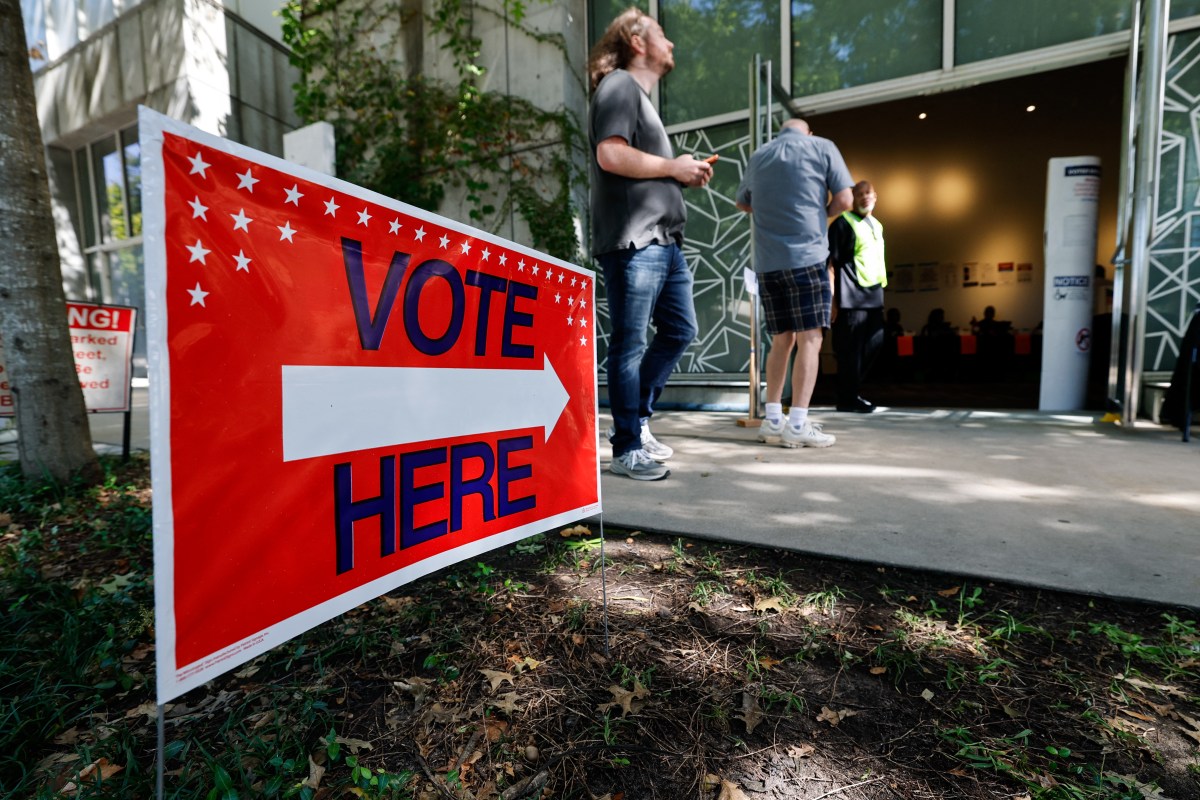
Election officials in several states are refusing to allow Justice Department election monitors inside polling places during next week’s midterm elections as the federal government prepares its largest election-monitoring operation to date.Officials in Indiana and Kentucky, as well as Washington County, Arkansas, have said Justice Department monitors will have to remain outside polling locations when voters cast ballots on Nov. 3.The restrictions come as the department plans to deploy roughly 1,000 monitors across all 50 states. Federal election monitoring predates the current administration, but this year's operation is expected to be much larger. By comparison, 289 monitors were deployed for the 2022 midterms and 714 for the 2024 presidential election.Read More on NewsA Justice Department spokesperson told Newsweek in an email that the department has "never said that it would send federal law enforcement to the polls."The department has not provided Newsweek with a full list of jurisdictions where its monitors will be deployed. Asked whether the locations had been finalized, the spokesperson said the department would provide its full list on Election Day.People arrive at a polling location during early voting in the midterm election, in Atlanta, Georgia, on Oct.13, 2026. | Erik S. Lesser / AFP via Getty ImagesThe department has separately said its monitors will observe and report potential violations of federal law and are subject to requirements that they not interfere with voting.Monitors will include employees from the Federal Bureau of Prisons, ATF, DEA, and CBP, with the Justice Department saying those deployed will be limited to routine Civil Rights Division monitoring duties, according to court filings.The Trump administration’s unprecedented expansion of federal election monitoring is raising concerns about voter intimidation, federal overreach, and the potential suppression of eligible voters. Critics warn that an increased federal presence around polling places could fuel fear and deter eligible voters from casting ballots. The Justice Department says its monitors will observe and report potential violations without interfering with voting, but officials in several states are challenging their access to polling places, citing state laws and the need to protect voters from intimidation.The deployment comes amid the administration’s crackdown on alleged illegal voting, including clamping down on noncitizens and lawful permanent residents. President Donald Trump has repeatedly made false claims that the 2020 election was stolen. At a Republican midterm convention in Dallas in September, he urged supporters to “try and cheat like hell,” even as his administration has framed its expanded election monitoring and crackdown on alleged illegal voting as efforts to protect election integrity.Indiana Officials Say Monitors Must Remain OutsideIndiana election officials said Justice Department monitors assigned to Marion and Lake counties will not be permitted inside voting locations under state law."Their default position is to remain outside and not enter the voting location unless state law otherwise permits their entry," an Indiana Election Division official told the Indiana Capital Chronicle. "In our agency's view, our state law does not give federal monitors access to enter any voting location."Up to 12 monitors are expected in Marion County and another dozen in Lake County, according to local election officials. Marion County Clerk Kate Sweeney Bell said the monitors would remain at least 50 feet from polling-place entrances. She said monitors in Indianapolis are expected to work in pairs and conduct voluntary interviews with voters after they leave polling locations.Republican Attorney General Todd Rokita welcomed the Justice Department's deployment, pointing to charges his office filed against a man accused of illegally voting in six elections. “It does happen, and we know there are more out there. That’s why it’s critical to ensure the laws are being followed,” Rokita said in an Oct. 26 news release. “Federal monitors who observe and report simply add another layer of accountability to the work our great state already does to protect the integrity of every legal vote.”Kentucky Officials Bar Federal Monitors From Polling PlacesElection officials in Kentucky have said federal monitors will not be allowed inside polling places in Jefferson and Fayette counties.In an October 26 news release, the Jefferson County Clerk's Office said that, after consulting legal counsel and receiving guidance from the Kentucky State Board of Elections, it informed the Justice Department that routine federal monitoring inside polling locations was not authorized under Kentucky law without other applicable legal authority.The office said in the release that it had offered alternative ways for Justice Department representatives to raise concerns, access public election information and report potential voting-rights issues. The department had indicated that about a dozen federal monitors were expected to visit Louisville, according to the release.David Yates, the Jefferson County clerk, said the monitors were Justice Department employees serving as civil election monitors and would not be working in a law enforcement capacity."Every voter has the right to cast a ballot free from threats, harassment, interference, or intimidation," Yates said in a news release. "Anyone who witnesses or experiences potential voter intimidation should immediately notify an election officer or contact our office at 502-574-6100."Republican Kentucky Secretary of State Michael Adams said federal monitors would remain outside polling locations and would not communicate with voters inside, according to Spectrum News 1.“They've agreed they're not going to communicate with voters inside voting locations. They're going to respect our laws. They're going to stand outside, and they're not going to bother voters,” Adams said.Arkansas County Votes Against AccessThe Washington County Election Commission voted 3-0 to deny Justice Department monitors access to polling places, according to the Fayetteville Flyer. Elections Director Jennifer Price said the county was notified October 20 and later met with federal officials.Price said Justice Department officials told the county that local election commissions could decide whether monitors could enter polling sites. Without permission, monitors would remain outside the 100-foot boundary, the Arkansas Times reported.The Justice Department also plans to send monitors to Pulaski County, according to the Arkansas Advocate.Seven Michigan Cities ConfirmedMichigan, by contrast, has publicly acknowledged the federal monitoring plans without announcing a blanket prohibition on monitors entering polling places.The Justice Department's Civil Rights Division sent notices to seven cities on October 21: Detroit, East Lansing, Flint, Grand Rapids, Hamtramck, Lansing and Warren, according to an official release from Michigan Attorney General Dana Nessel's office.Michigan officials said federal monitors have been present during several previous federal elections, including in 2024. The attorney general's office said federal law does not expressly provide for Justice Department monitors and that, under Michigan's framework, their presence is comparable to a member of the public observing as a poll watcher. The state said monitors cannot speak with voters, touch ballots or election equipment, or interfere with election administration.“It’s important for residents to know that DOJ monitors are a standard part of our election process, and we anticipate they will comport with state and federal law just as they did in this year’s August Primary," Nessel said in a news release. "But make no mistake, my office stands ready to hold accountable those who attempt to unlawfully interfere with or intimidate Michigan voters or election workers, regardless of who they may be.”“Michigan elections are safe and secure,” Governor Gretchen Whitmer said in a news release. “The presence of federal election monitors is an expected part of the process, as it has been for years. Election officials here work year-round to ensure every eligible voter can cast a ballot, and the same continues to be true ahead of November 3rd. In Michigan, we will continue to protect the fundamental right to vote.”Contact Newsweek editors on this story: John Fitzpatrick and Emma Lee-SangOctober Flash SaleFirst Year $10Enjoy ad-free access to our largest-ever collection of member exclusives & much more. Auto-renews at just $49.