Plaza Hotel's Sudden Closure Leaves Brides Scrambling to Save Six-Figure Weddings
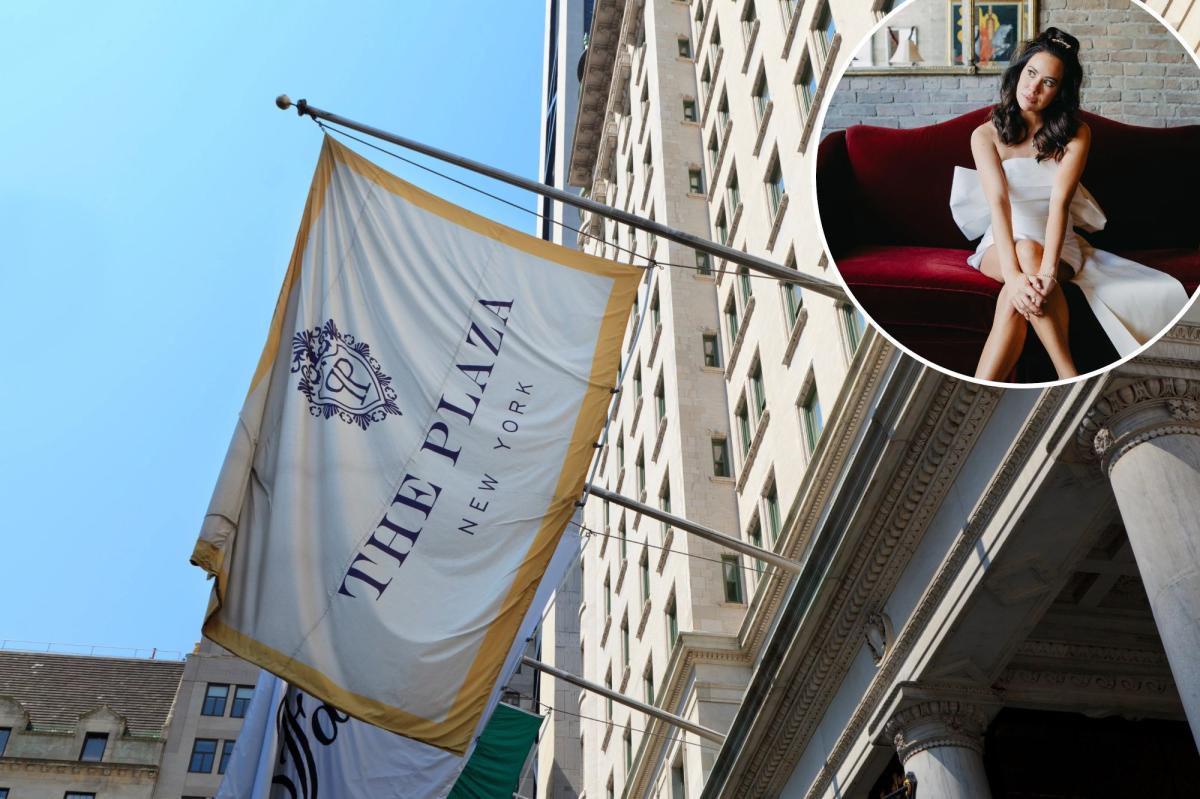
It went from a fairy tale to a fiasco. Numerous brides who had booked six-figure weddings at New York City’s legendary — and ultra-luxury — Plaza Hotel have been left scrambling to find altar-nate venues after the bombshell announcement that it was closing in January for at least four years.Christine Carney, whose costly May 1 wedding had been booked almost a year in advance, only learned that her dream day was dashed when a friend texted her about the closure.The 38-year-old Chicago-based bride, who had wanted to tie the knot at the opulent hotel since childhood, told The Post she spent seven agonizing minutes on hold with the hotel’s concierge — before being told that her 200-guest wedding was suddenly without a venue.The Plaza Hotel will be closed for years for renovations. Chad Rachman/NY PostTo make matters worse, she told The Post, “We haven’t yet had anyone from the plaza reach out to tell us what next steps are and what happens with our money.The photographer, band, flowers, and rentals have all been secured with deposits, while her rehearsal dinner and welcome party are still up in the air.Christine posing for engagement pictures. Claudia Lumperdean“Everything for spring books up so quickly we would have to hope they’re willing to refund us so we can find a replacement, or we’d have to eat the deposit and find a replacement anyway,” she groaned.“I’m definitely frustrated and disappointed that this happened, and I’m anxious to figure out what the next steps will be.”And with save-the-dates already sent, downsizing isn’t an option.So for her, the show must go on.The question is just where… and when. And that part is sending high-end event planners into a frenzy.Christine and her fiance posing together. Claudia LumperdeanFor Alyssa Pettinato, owner of Alinato Events and Carney’s wedding planner, the sudden shutdown means planning the entire extravagant affair all over again — for free.“Technically, we are getting penalized as planners,” Pettinato told The Post. “Am I allowed to ask them for payment for this?”The planner said the wedding band has already been difficult about a possible date change, creating yet another expensive headache.And the predicament isn’t entirely unheard of: Pettinato said this is the third wedding she’s had to replan this year because of venue-related disruptions.Guests attend a lavish event in The Plaza Hotel’s Grand Ballroom. Rabbani and Solimene Photography/Getty Images for FITBut the veteran event planner says the announcement feels out of left field and, for a place as prestigious as the Plaza, the lack of communication has been particularly shocking.Pettinato said she was still working with hotel employees on room-block contracts when news of the closure broke — and believes staff members were completely unaware.“People who have been working there for decades are blindsided,” she said. “It feels like it was a leak because they seem extremely ill-prepared.”Hannah Livingstone, a 30-year-old bride from Scotland, booked eight nights in a Plaza suite for roughly $9,000.00 and splurged on first-class flights to New York for an intimate February wedding with her partner, James McPherson.A general view of one of the ballrooms. WireImageA lifelong fan of American romantic comedies and Sex and the City, Livingstone planned a first look to capture the moment the couple sees each other for the first time in the Plaza’s bar, wedding photographs, and even dress-steaming services.Instead, she discovered the hotel was closing while scrolling TikTok—a rather 1-star experience.“I thought, no, that surely can’t be right,” Livingstone told The Post.Just weeks earlier, she’d been in contact with the hotel to firm up her booking and preparation for the day.“It’s a bit mad to me that they’ve still been taking bookings and still being in contact like things are as normal,” she said, adding that she is still yet to hear directly from the hotel and her wedding is 4 months away.The hotel offers bridal suites and entire experiences designed to make a wedding memorable. Steven Chrappa“I’m quite stressed out obviously.”The couple still plans to marry in New York on the same date, but finding another comparable hotel has been disappointing, and the timing couldn’t be worse.“I’m actually going away this weekend for my hen do, so obviously I was very upset last night,” the bride said. “It has come at a pretty rubbish time.”The hotel management has attributed the closure to extensive restoration work on its landmark-protected façade, citing the undertaking’s complexity and safety considerations.But some planners familiar with the venue told The Post that the hotel’s gilded grandeur hides interiors that have begun to show their age.Brides are now scrambling since their Plaza-planned weddings are being canceled. Rabbani and Solimene Photography/Getty Images for FITCasey Kaufman, founder of Imagine Party and Events, has planned numerous lavish affairs at the Plaza over the years and estimates weddings at the legendary landmark can run upward of $1,200 per guest — with elaborate celebrations easily reaching $500,000 or more.Kaufman recalled one wedding where her team essentially built an entirely new room inside a Plaza event space, erecting temporary walls to conceal the originals.At another, they installed new window treatments to disguise dated architectural features.“I’ve taken people to the Plaza recently, and they’re just like, it’s dated,” she said, noting that costly décor upgrades can pile onto an already astronomical bill.With the newly renovated Waldorf Astoria back in business, Kaufman speculated the hotel may have felt pressure to keep up, adding that she’d be surprised if it didn’t use the four-year closure to refresh its ballrooms, too.Many are devastated over their Plaza dreams being over, thanks to year-long renovations. Zach Hilty/BFA.com/ShutterstockStill, she emphasized that the Plaza’s name, history and prestige are nearly impossible to replicate.“I’ve had clients who came to me before they got engaged and said, ‘I know I’m getting married at the Plaza,’” Kaufman said, recalling couples determined to follow in their grandparents’ footsteps.And weddings aren’t the only ones getting the boot.The Russian Children’s Welfare Society announced that its annual Petroushka Ball, held in February and a fixture of New York’s charity gala circuit, can no longer be held at the Plaza next year.The shutdown will also put other quintessential Plaza experiences on hold, from extravagant birthday celebrations in the Eloise Suite or the Home Alone 2 experience.As for refunds on deposits, Pettinato hopes the hotel will be fair.“Your contract could say whatever you wanted to say, but are you going to blow up your reputation by fighting something that’s technically immoral,” she argued. “That’s where it gets a little blurry. Something of the caliber of The Plaza, like I would expect them to give everyone a refund and not even fight that.”In response to The Post’s inquiry, the Plaza provided only its public statement and offered no further details about affected bookings or refunds.